Tax Free in Spagna e Italia: chi gestisce l'IVA | STAMP
tax-free-in-spain-and-italy-who-manages-vat-stamp


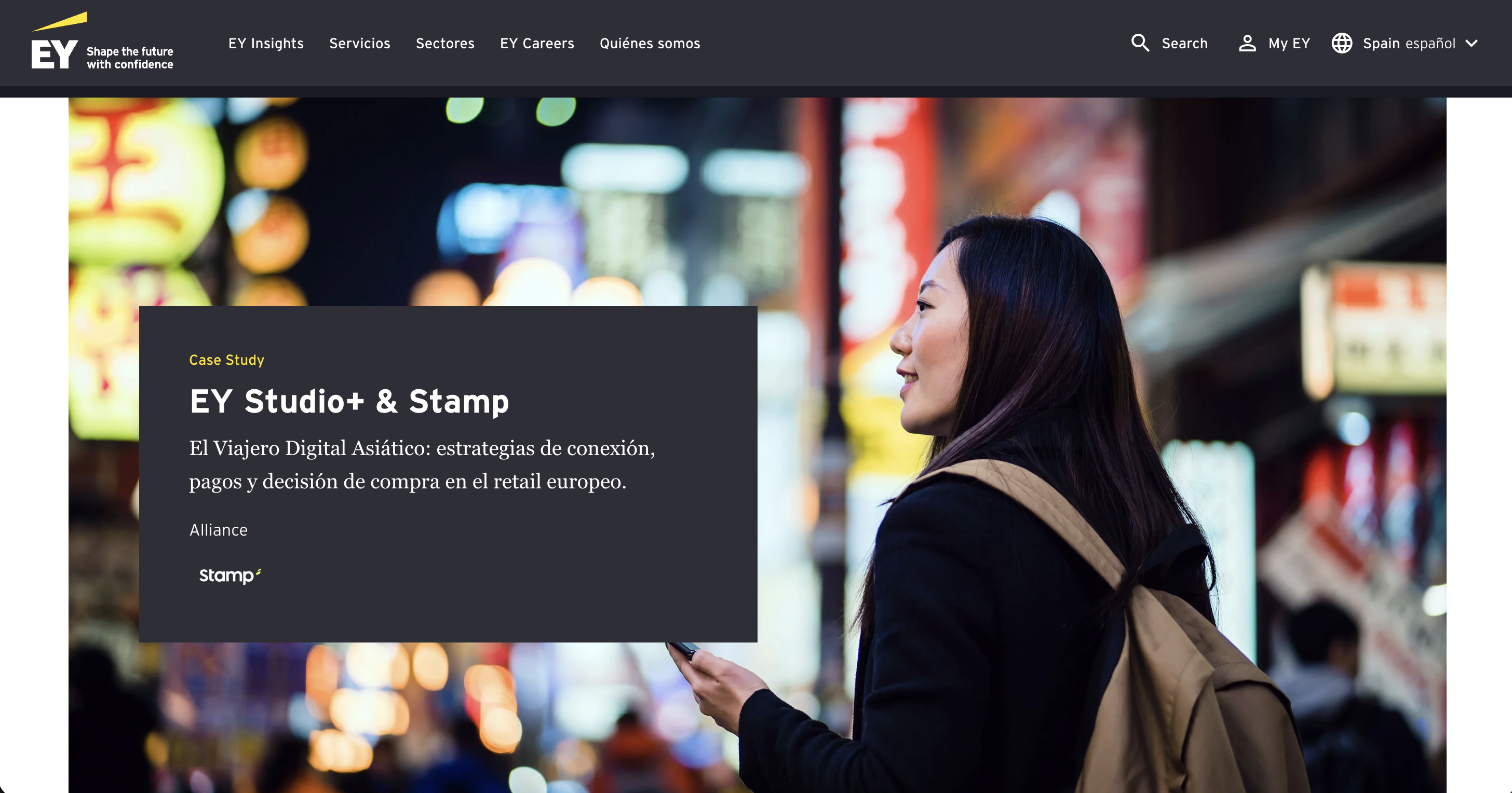
Chinese travellers are back in Europe. After the pandemic pause, the segment that historically led international tourist spending is regaining its mobility. According to EY, it arrives with an average ticket nearly double that of other tourist profiles.
But it arrives changed. It no longer looks only for the big luxury brands it can buy at home. It looks for experiences, local boutique brands, good food and products with a story to tell back home.
That is great news for European retail. The problem is that most retailers are not ready to capture it. Read the full case study on ey.com.
EY puts it this way: the main barrier for European brands is not quality, but their digital non-existence in the eyes of Asian travellers.
Western tourists decide between Google, Instagram or TripAdvisor. Chinese tourists use none of these. Their compass is the super apps: WeChat for search and socialising, Xiaohongshu (RED) for lifestyle and travel, and Dianping for reviews. And they decide before leaving home:
A store can sit on the best street in Madrid or Milan and still compete at a clear disadvantage against one that is present on RED or WeChat.
For Chinese consumers, the payment method is not the end of the process: it is an upfront filter.
According to EY, accepting payment is not enough. Brands need to accompany travellers from inspiration in China to after the purchase. EY positions STAMP as the technology bridge connecting European brands with a digital ecosystem of 2 billion users.
Before the trip: get found (Drive-to-Store)
In store and after: make them buy and come back
EY closes the case with a clear idea: integrating payments and engagement is not a technology upgrade, it is a strategic business decision. STAMP gives retailers the infrastructure to stop being invisible. Curiosity becomes footfall, footfall becomes secure sales, and sales become a brand story shared back in China.
Is your store visible to Chinese tourists? Discover Drive-to-Store, enable Alipay+ and WeChat Pay or talk to our team.
EY Studio+ validates STAMP's combined model (visibility + native payments) with cases such as Casa Batlló, where a WeChat ticketing miniprogram drove exponential growth in digital sales, and Botín, which raised its average ticket. Source: EY Spain.